23 May 2026
Tracing the Evolution of Bonus Activation Triggers in Response to Changing Mobile Network Capabilities
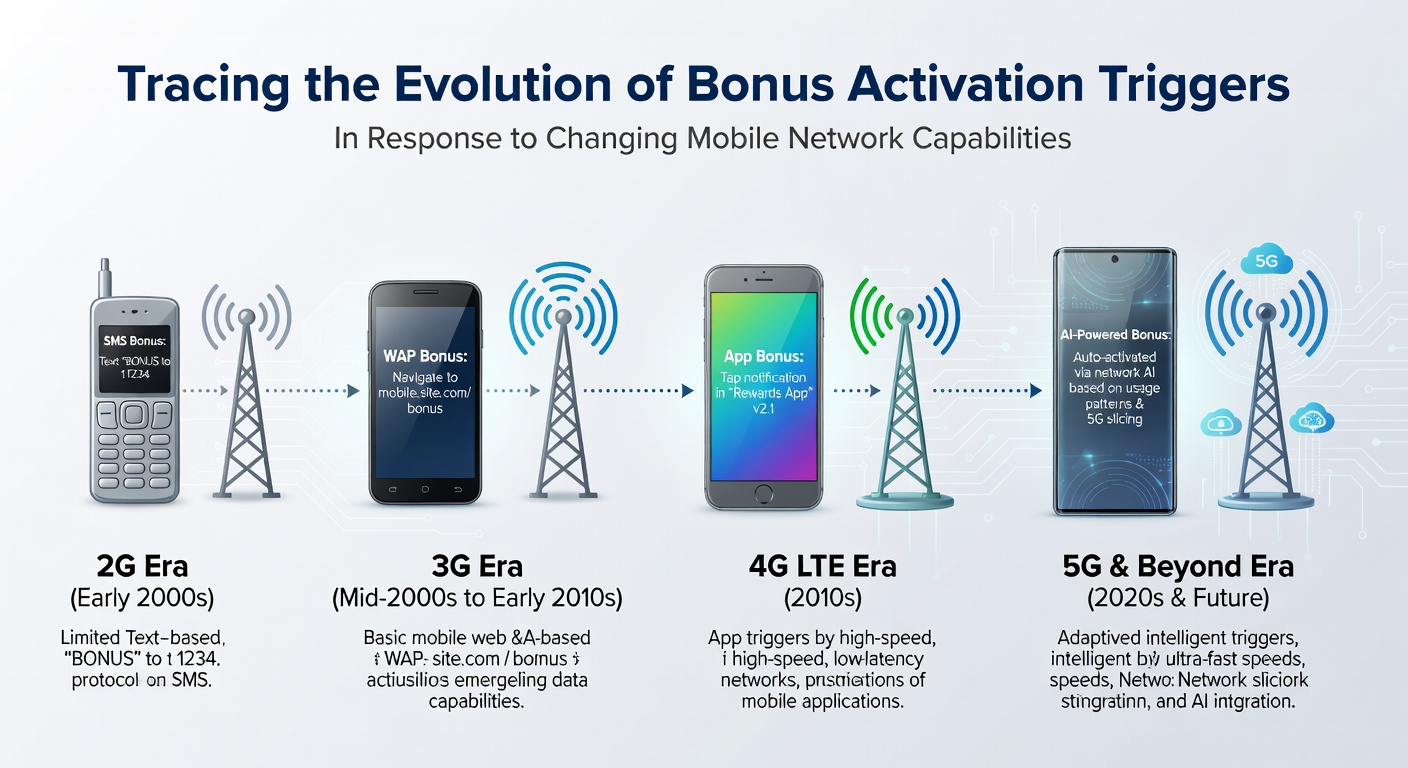
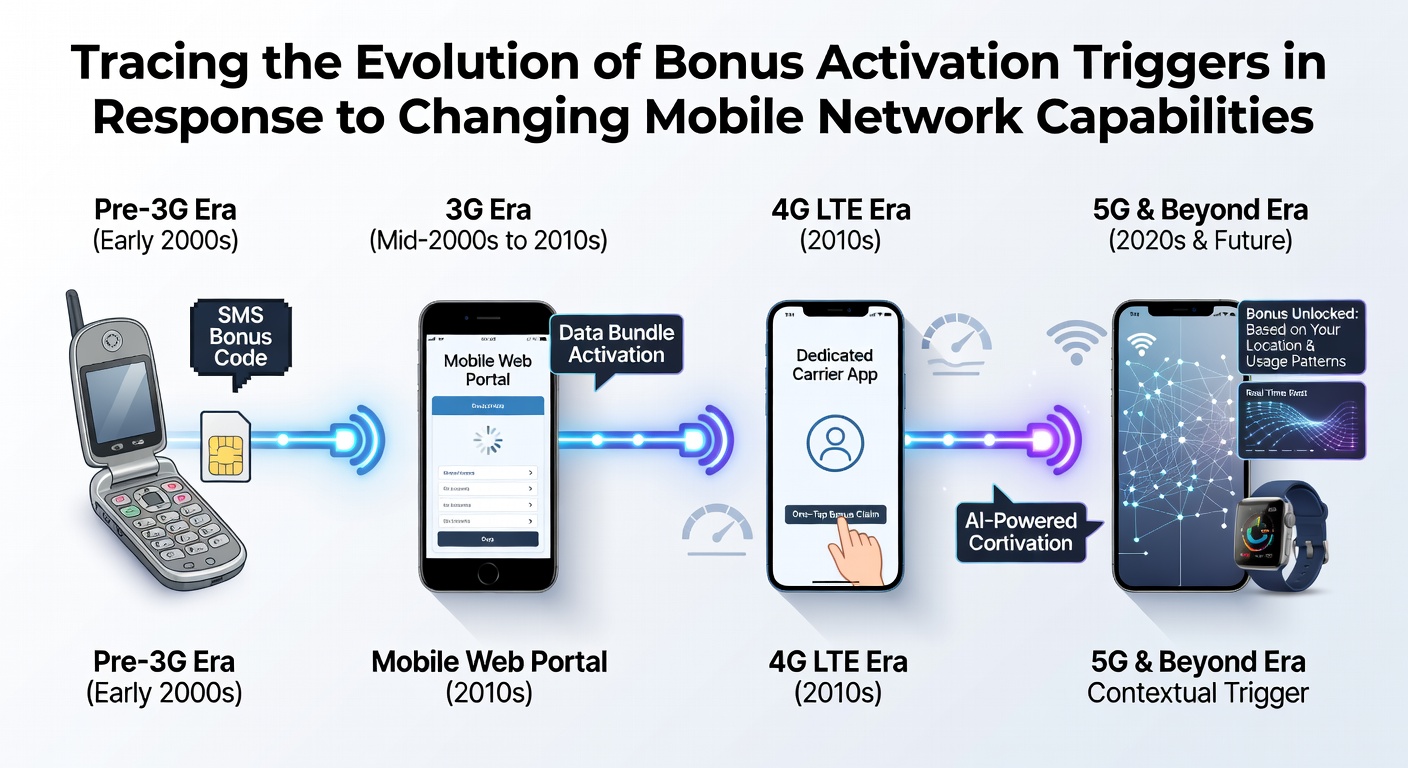 Mobile gaming platforms have adjusted bonus activation mechanisms as cellular infrastructure advanced from limited bandwidth connections to high-speed, low-latency systems. Observers note that these shifts began with basic server checks during the 3G period and progressed to real-time, data-intensive triggers that rely on stable connections and rapid data exchange. Data from industry reports shows that early mobile casino applications depended on simple button presses or fixed timers because network reliability remained inconsistent, with average latencies often exceeding 100 milliseconds.
Initial Stages Under 3G Constraints
Developers designed bonus features around the technical limits of 3G networks, which delivered download speeds between 384 kbps and 7.2 Mbps in optimal conditions. Activation sequences required players to initiate a spin or match and then wait for server confirmation, a process that frequently encountered delays or interruptions when signal strength fluctuated. According to figures from the Federal Communications Commission, 3G coverage expanded significantly through the late 2000s, yet packet loss rates stayed high enough to discourage complex triggers such as location-based rewards or progressive multipliers that update continuously. Those who studied early mobile gaming logs found that bonus hit rates remained low partly because many activations failed to complete before timeout thresholds triggered resets.
Expansion During 4G Deployment
The rollout of 4G LTE networks introduced average latencies around 30 to 50 milliseconds and consistent speeds above 20 Mbps, which allowed developers to introduce layered bonus systems. Triggers evolved to include random events tied to player behavior patterns, such as consecutive wins or accumulated playtime, because data packets could travel reliably between devices and central servers. Research from the International Telecommunication Union indicates that global 4G subscriptions surpassed 2 billion by 2016, coinciding with an increase in mobile casino engagement metrics reported across multiple markets. Observers documented the appearance of hybrid triggers that combined on-device calculations with occasional server validations, reducing the load on slower connections while still enabling features like cascading reel bonuses or multiplier ladders that build across multiple rounds. One case from North American operators revealed that these changes coincided with measurable rises in session durations once network handoffs between towers became seamless.
Advancements with 5G and Network Slicing
By 2021 commercial 5G services began delivering sub-10 millisecond latencies and multi-gigabit throughput in urban areas, opening pathways for triggers that respond to live environmental data or synchronized multiplayer elements. Network slicing capabilities let operators allocate dedicated virtual channels for gaming traffic, which reduced jitter and supported continuous monitoring of player actions without buffering. Reports compiled by the GSMA show that 5G connections reached over 1.5 billion worldwide by early 2025, with projections pointing to further density increases through 2026. In May 2026 several regional carriers completed spectrum refarming projects that extended reliable 5G coverage into suburban zones previously limited to 4G fallback, prompting additional refinements in bonus logic. These refinements included geo-fenced activations that unlock only when devices maintain stable millimeter-wave links and predictive triggers that preload assets based on anticipated network conditions derived from historical signal maps.
Industry Adjustments and Technical Standards
Platform providers adapted their back-end architectures to handle the variable nature of mobile connections while complying with data protection requirements set by bodies such as the Australian Communications and Media Authority. Testing protocols now incorporate simulated packet loss scenarios and handoff events to verify that bonus states persist correctly across network transitions. Developers incorporated edge computing nodes closer to cell towers so that certain activation decisions occur locally before full server reconciliation, a technique that maintains continuity even during brief signal dips. Figures released by mobile analytics firms indicate that games utilizing these hybrid models recorded completion rates for bonus sequences above 98 percent under 5G conditions compared with roughly 85 percent under legacy 4G environments in comparable tests.
Conclusion
Network capability upgrades have directly shaped the complexity and reliability of bonus activation systems in mobile environments. As infrastructure moved through successive generations, the range of possible triggers expanded from basic server-verified events to dynamic, context-aware sequences that leverage low latency and high bandwidth. Current deployments continue to refine these mechanisms in line with ongoing spectrum allocations and coverage improvements expected through the remainder of 2026.